Microsoft AI beats doctors: 83% against 36%
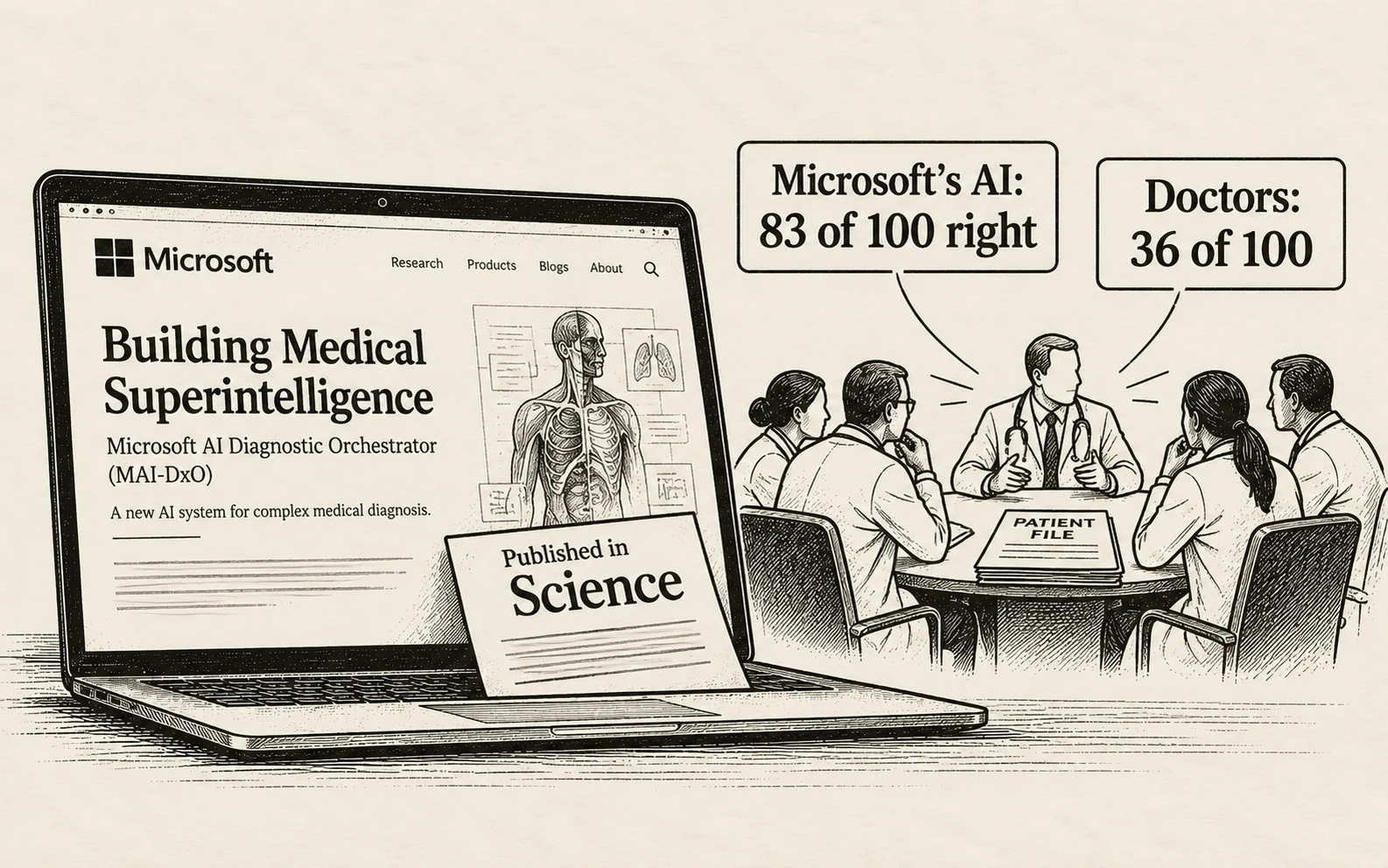
Microsoft said on the 22nd of October 2026 that its AI found the right illness in 83 of 100 hard cases, against 36 for doctors with books. The tests used old case notes, and a test with real patients in Boston comes next.
 Microsoft's AI doctor team, 83 of 100
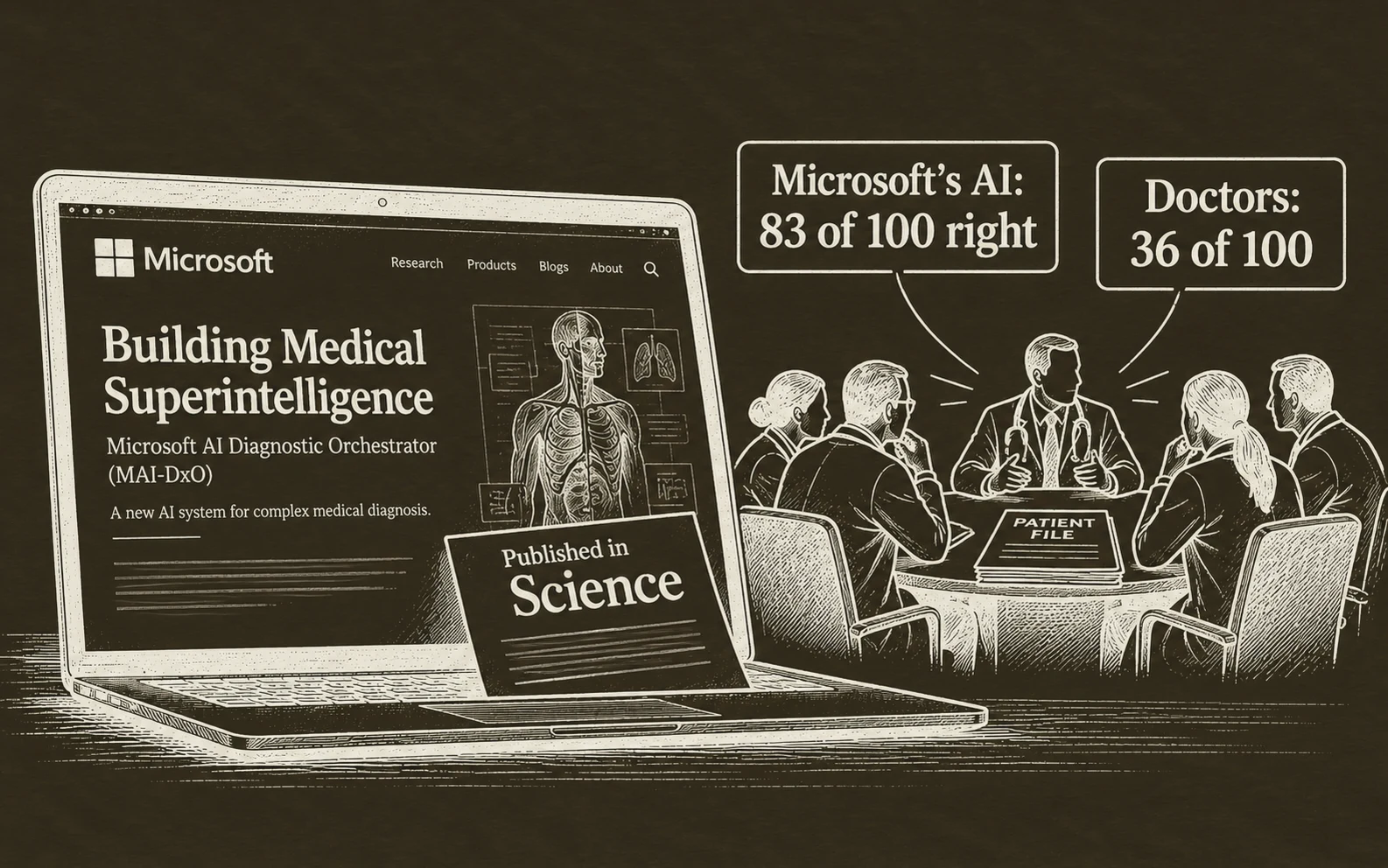
Microsoft's AI, or artificial intelligence, found the right illness in 83 of 100 hard cases, the firm said on the 22nd of October 2026. Doctors with books and the web got 36 right.
The work is in Science, a top science journal, and outside experts checked it first, the firm's page says.
How Microsoft's AI works: a team of virtual doctors that asks, tests and argues
The system is called MAI-DxO, short for Microsoft AI Diagnostic Orchestrator. A diagnosis means finding out which illness a person has.
AI helpers act like a team of doctors who ask, pick tests and argue, the page says. It runs on OpenAI's GPT-5, an AI chat model, The Verge reported.
Below we break down the scores, the 629 cases and the cost of tests
The 304 hard cases came from The New England Journal of Medicine, a top journal for doctors. Doctors without books got 22 right.
Another 325 were common cases from an emergency room. There the AI got 80 of 100 right and doctors got 47, the page says.
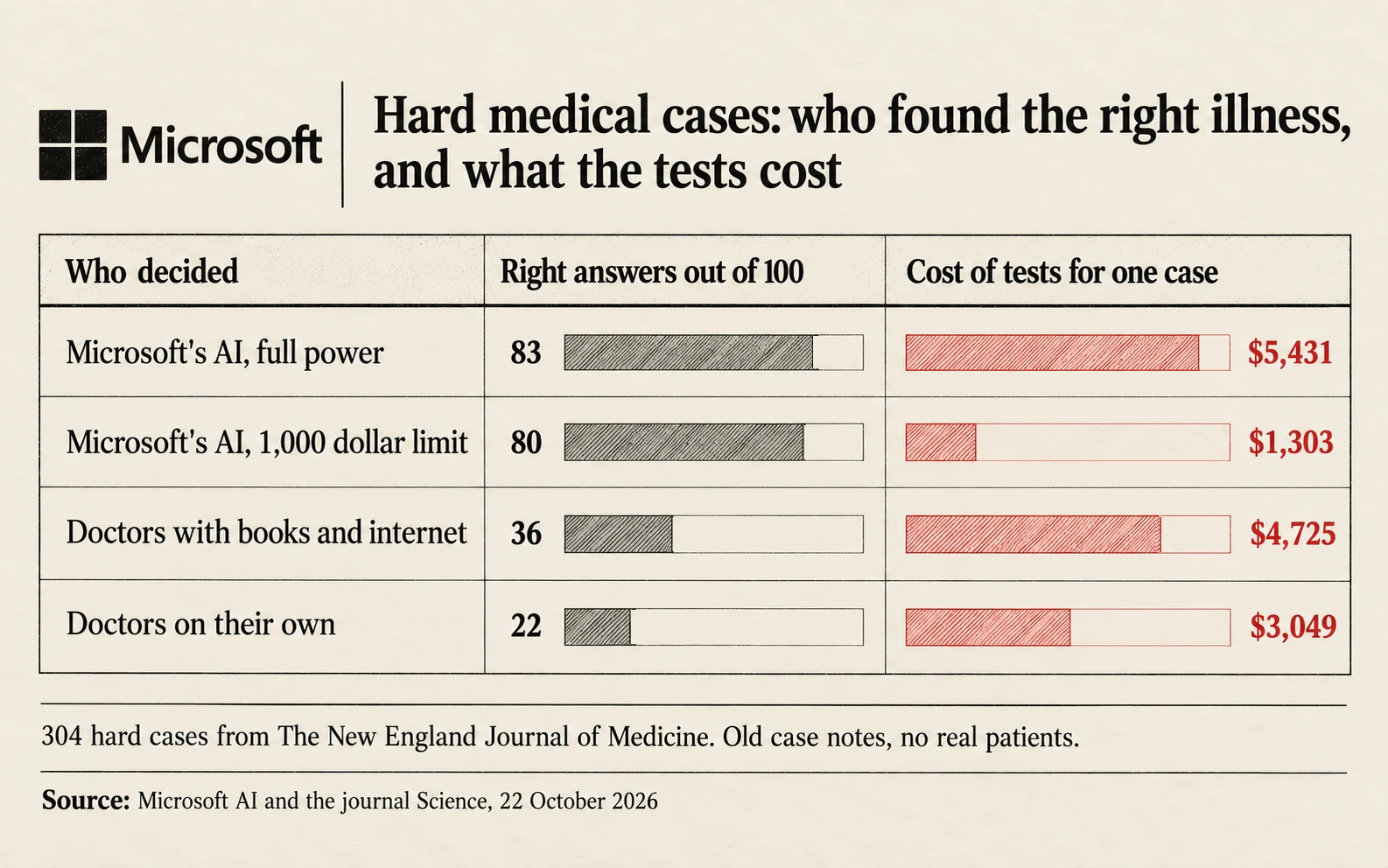
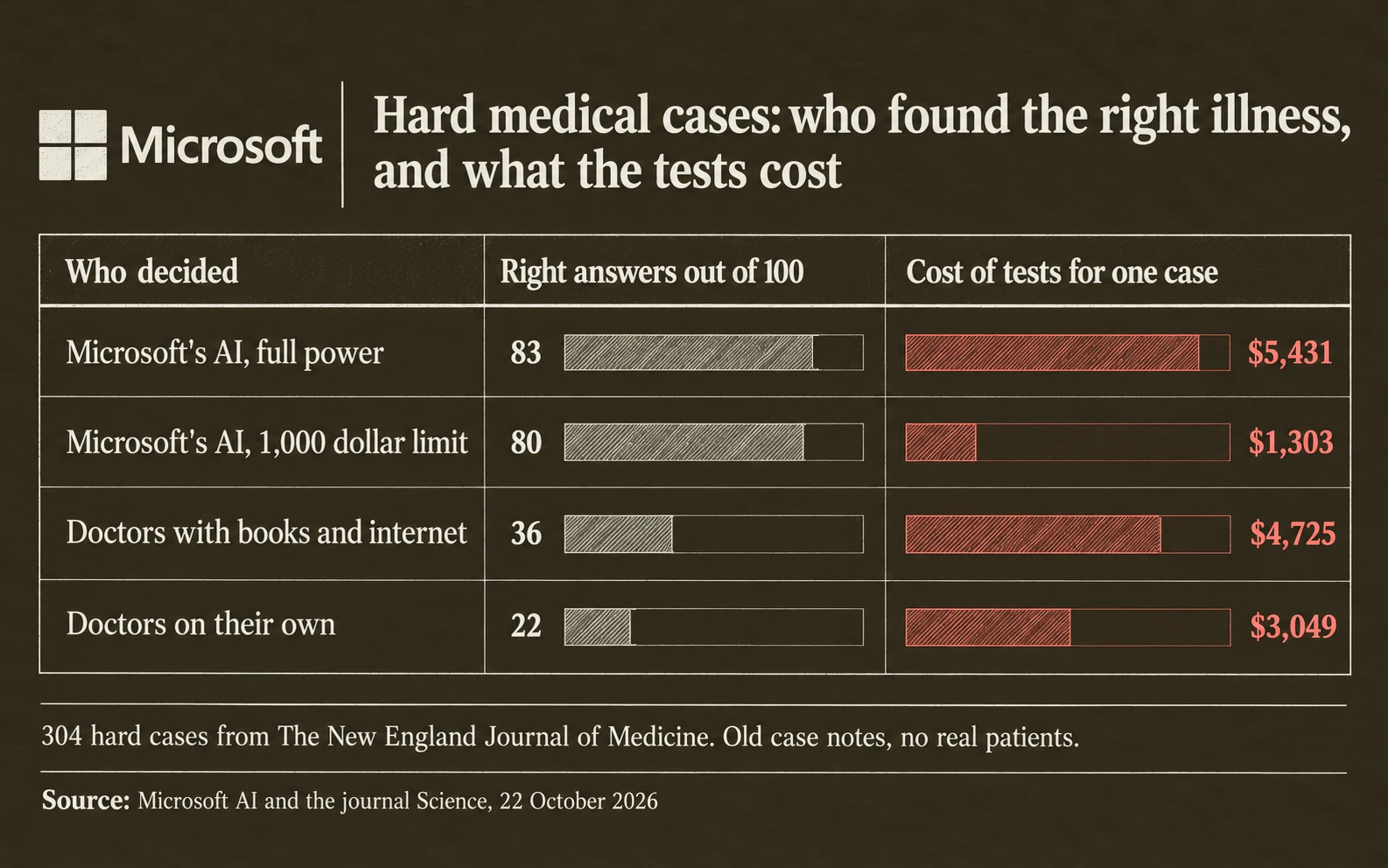
The cost counts only the tests each one asked for, the firm's chart shows. At full power the AI asked for 5,431 dollars of tests a case, and doctors with books 4,725.
With a 1,000 dollar limit the AI still got 80 right, at 1,303 dollars. That is about a quarter of the doctors' cost, by our arithmetic.
What is confirmed and what is not
All tests used old case notes, so no real patient was seen, The Verge reported. The doctors worked alone and saw only text, no scans, Medical Economics reported.
All 15 writers of the paper work at Microsoft, Medical Economics wrote. The firm's page does not say how many doctors took part.
Next: a test with real patients at a hospital in Boston
The AI will be tried with real patients at Beth Israel Deaconess Medical Center in Boston, the page says. "It needs clinical validation," Microsoft AI chief Mustafa Suleyman told The Verge, meaning proof with real patients.
The firm has set no date or price for public use, The Verge reported.
Key facts
Out in Science on the 22nd of October 2026.
Hard cases: 83 of 100 right, doctors 36 with books and 22 without.
Emergency room cases: 80 of 100 right, doctors 47.
Next: a test with real patients in Boston, no release date.
Source: Microsoft AI, Building Medical Superintelligence, and The Verge