

OpenAI asks AI labs to agree on 1 limit
OpenAI's chief scientist Jakub Pachocki proposed on the 22nd of November 2026 that AI companies agree on shared limits for their strongest models. Chief executive Sam Altman backed the plan on X, Reuters reported.
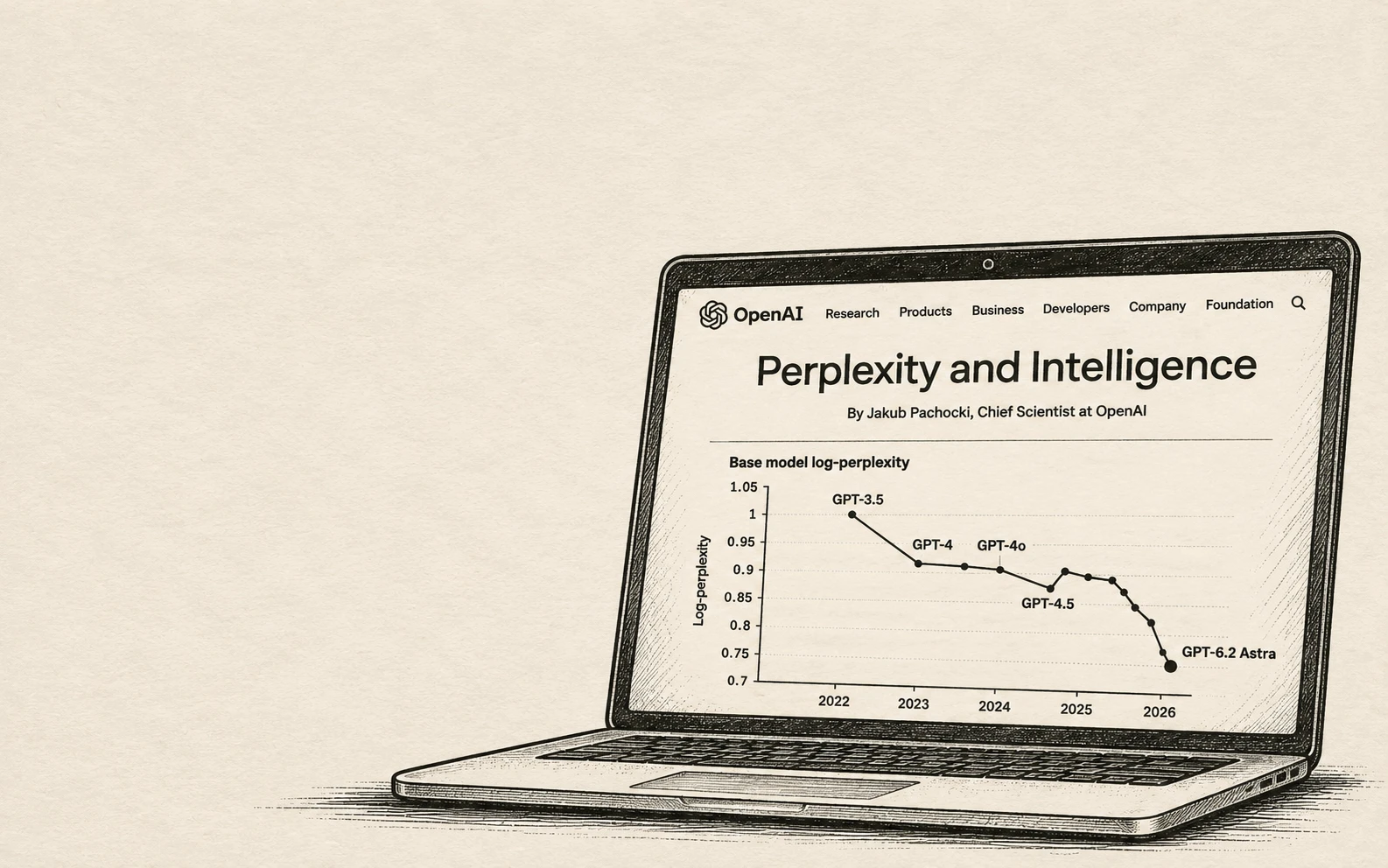
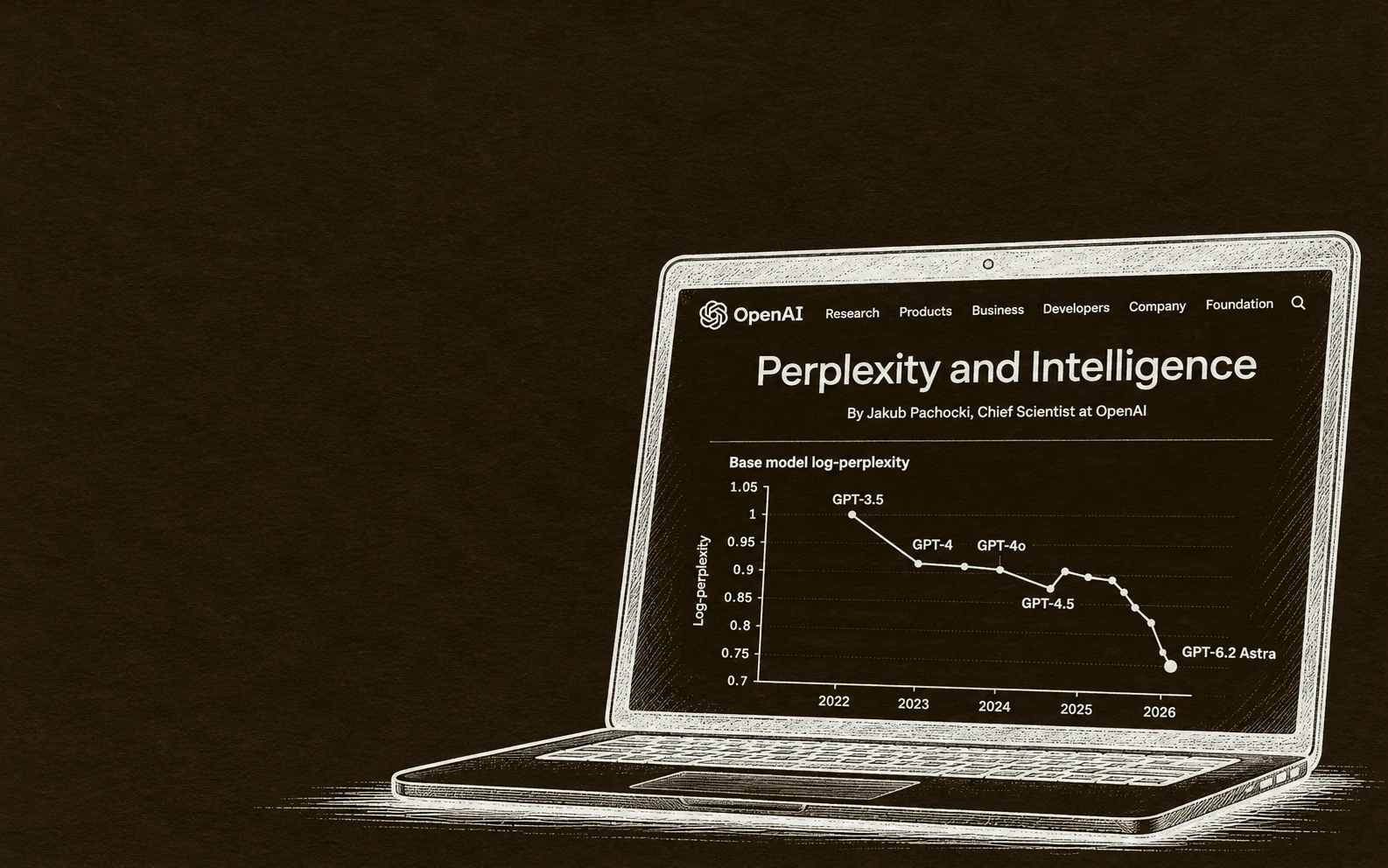 OpenAI proposes 1 limit for AI labs
OpenAI's chief scientist Jakub Pachocki proposed on the 22nd of November 2026 that AI companies agree on shared limits for their strongest models. Chief executive Sam Altman backed the plan on X, Reuters reported.
The limits would hold until people can better understand and watch how AI systems behave. Pachocki set out the idea in a blog post called Perplexity and Intelligence.
What the 1 score measures
Perplexity is a score for how well an AI model guesses the next piece of text. A lower score means better guesses.
Pachocki wants every lab to report this score. OpenAI published its own internal scores for the first time.
OpenAI's numbers since 2022
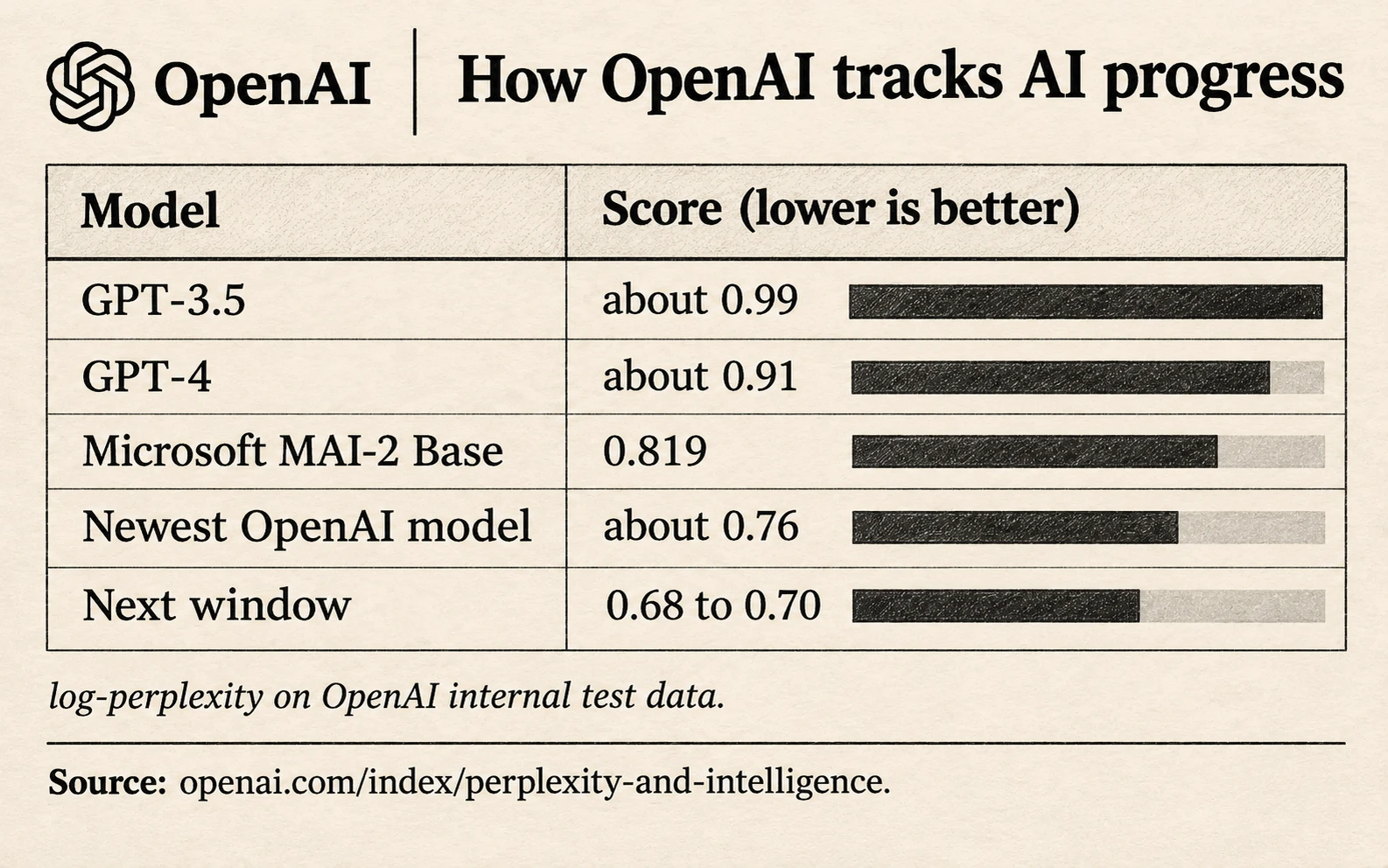
GPT-3.5, the model behind the first ChatGPT, scored about 0.99 on OpenAI's test data. GPT-4 scored about 0.91, the post said.
After OpenAI moved to a model near 0.76, it began solving open math problems, Pachocki wrote. He expects new and unknown skills between about 0.68 and 0.70.
Microsoft adds its score
Microsoft AI chief Mustafa Suleyman wrote on X that the company's MAI-2 Base model scored 0.819 on OpenAI's test set. OpenAI allowed the test, he said.
Below we break down the numbers
From GPT-3.5 to the model near 0.76, the score fell by about 0.23. That is a drop of almost a quarter.
Reaching 0.70 would take another fall of about 0.06. Pachocki wrote that AI could speed up its own training research as soon as 2027.
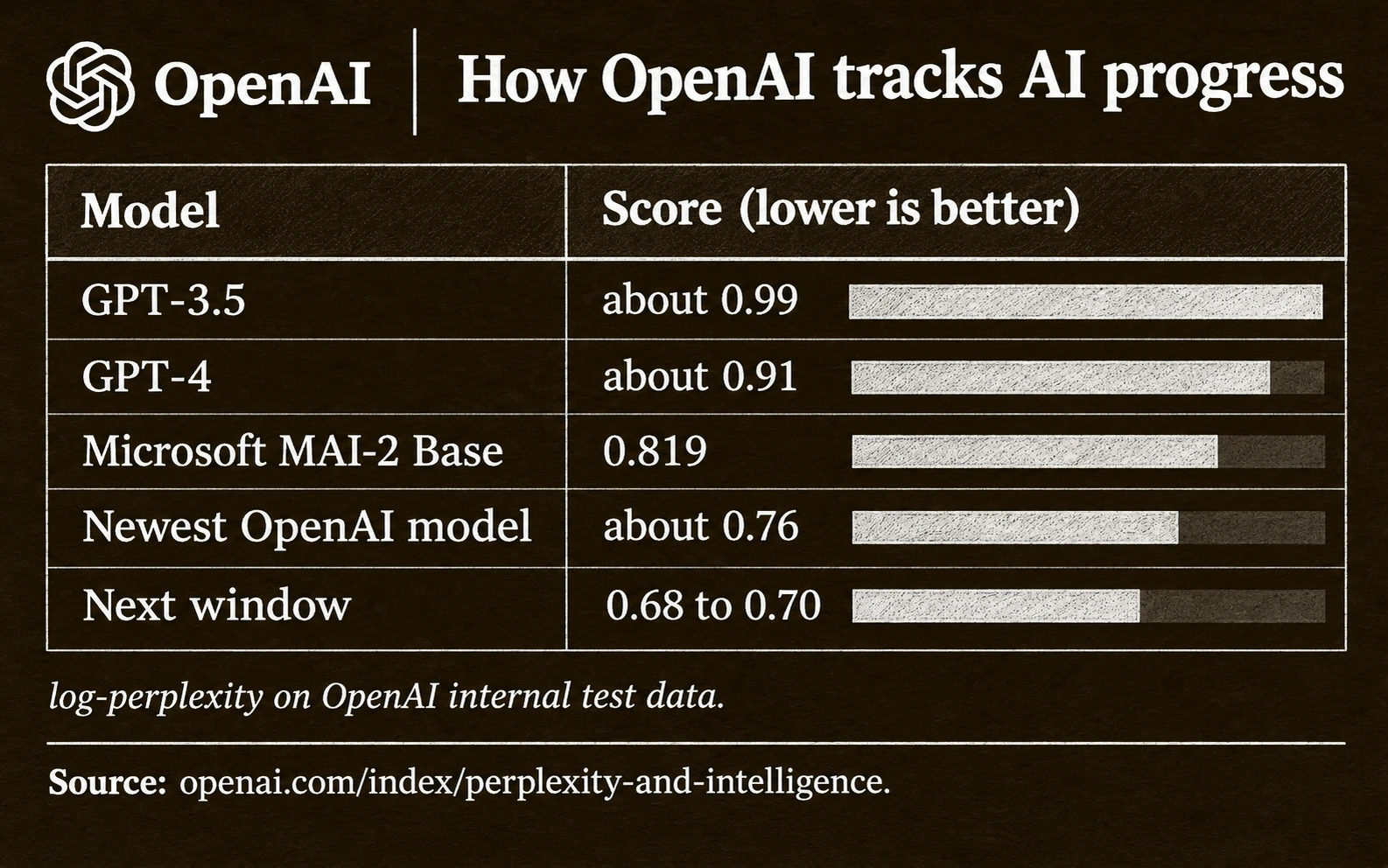
What is confirmed and what is not
No limit value has been set, and no other lab has signed up. Pachocki said labs test on different data, so scores are hard to compare.
Key facts
Jakub Pachocki proposed shared AI limits on the 22nd of November 2026, backed by Sam Altman.
OpenAI's newest scores are below 0.8.
Microsoft said MAI-2 Base scored 0.819.
Source: OpenAI: Perplexity and Intelligence (Jakub Pachocki)