

OpenAI cuts reasoning theft to 0.2 percent
OpenAI said on the 20th of November 2026 that it cut one kind of reasoning theft to 0.2 percent. The attack tries to pull out the hidden steps its models use to reach an answer.

 OpenAI hardens GPT-6.2 reasoning
OpenAI said on the 20th of November 2026 that it cut one kind of reasoning theft to 0.2 percent. The attack tries to pull out the hidden steps its models use to reach an answer.
OpenAI calls the threat adversarial distillation. That is when someone trains a rival model on another model's answers without permission.
Why the hidden steps matter
Models like GPT-6.2 Astra work through a problem in steps before they answer. These steps are called the chain of thought, and OpenAI keeps them hidden.
The steps can hold details the final answer leaves out, OpenAI said. That makes them very useful for training a copy.
What the test found
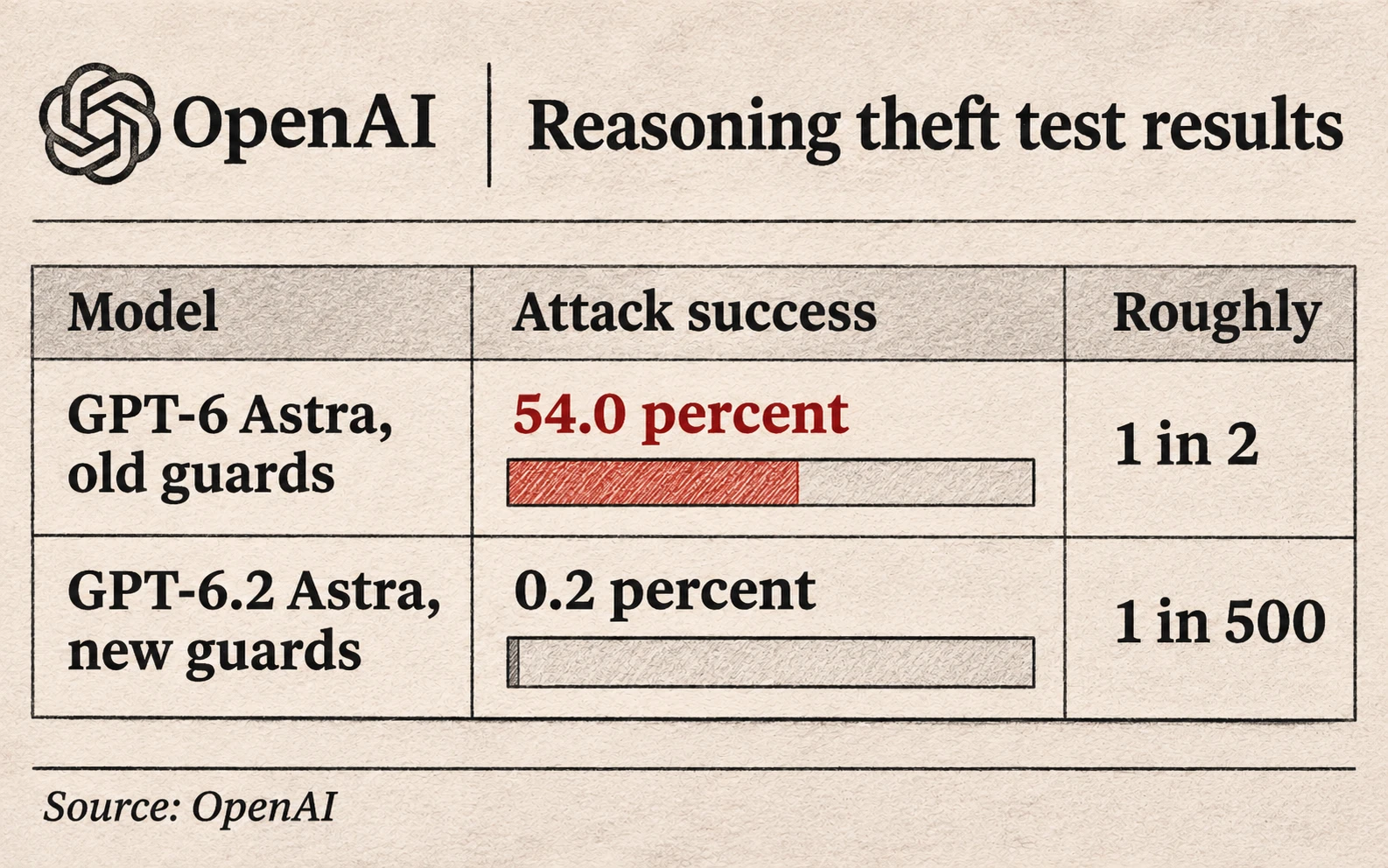
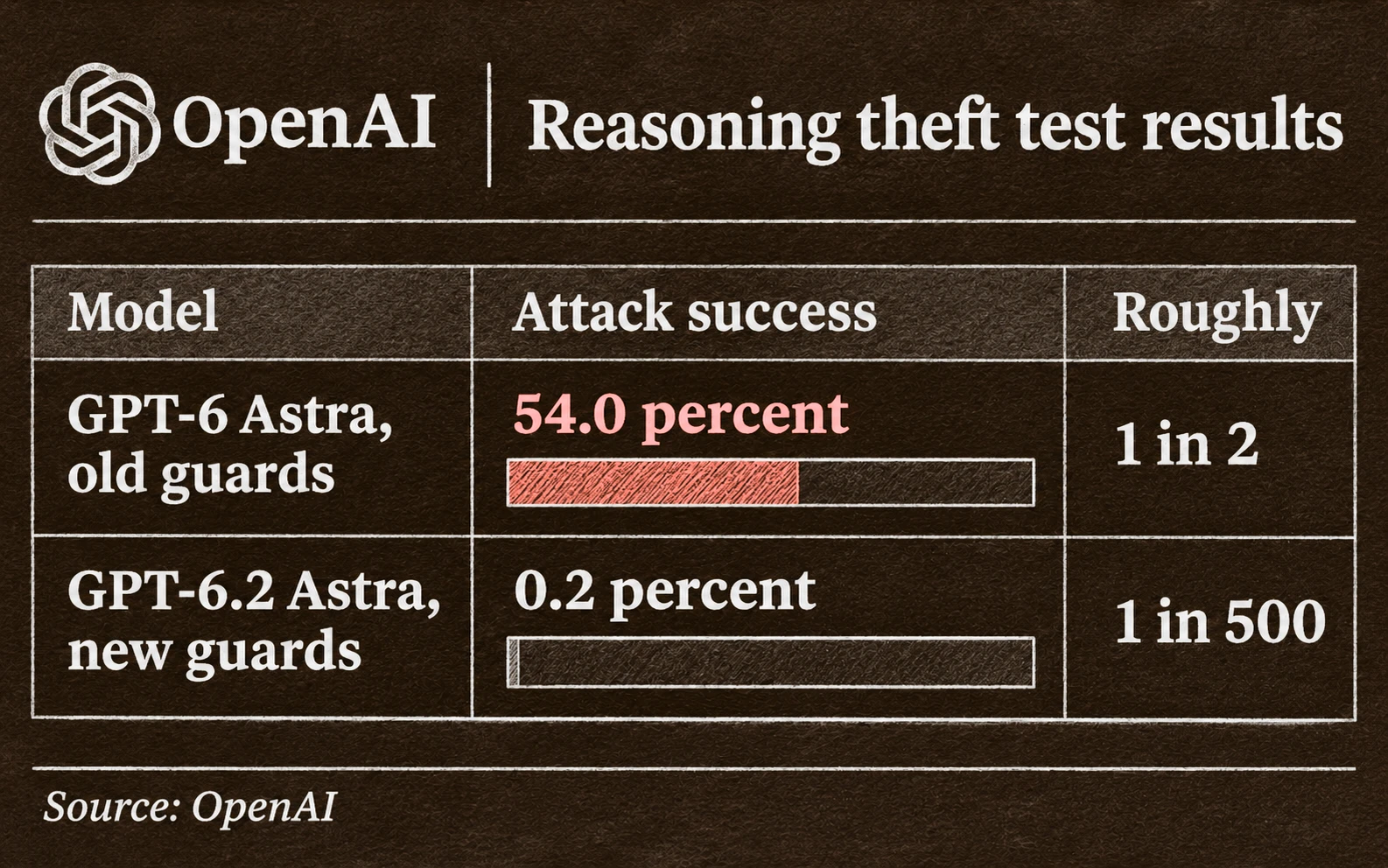
In OpenAI's own tests, attackers recovered hidden steps 54 percent of the time against GPT-6 Astra. Against GPT-6.2 Astra with new guards, they succeeded 0.2 percent of the time.
OpenAI says a copied model could keep the skills but lose the safety rules. It gave hacking help as an example.
Below we break down the drop
At 54 percent, about 1 attack in 2 worked. At 0.2 percent, about 1 in 500 worked.
That makes the attack about 270 times less likely to work, by our arithmetic. The test covered the newest Astra model.
What is confirmed and what is not
The numbers come from OpenAI's internal tests. Outside experts have not checked them.
AI Weekly reported that OpenAI again linked a September campaign to people tied to Moonshot AI, a Chinese lab. OpenAI also backs bills such as the Chip Security Act, the newsletter said.
Key facts
OpenAI shared its defense work on the 20th of November 2026.
Attack success fell from 54 percent to 0.2 percent.
The test compared GPT-6 Astra with GPT-6.2 Astra.
The attack targets hidden reasoning steps.